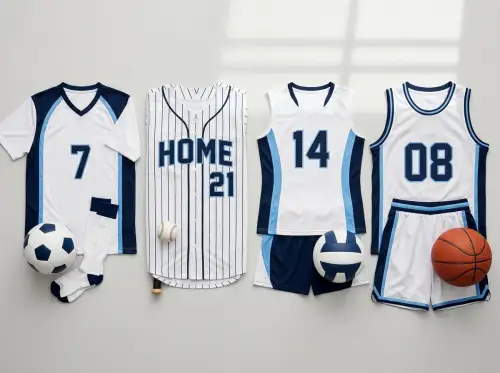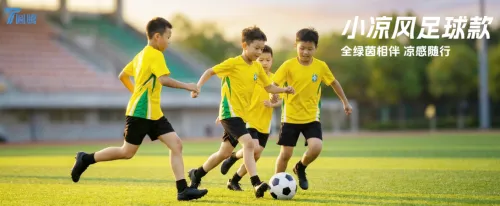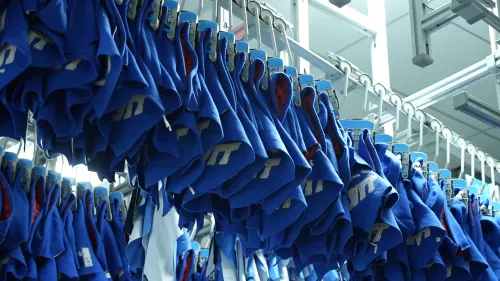

Design Without Pitfalls: Three Common Mistakes—Tonton Controls Bulk Production Quality at the Source
Introduction
On the journey of sourcing custom sportswear, instances of "production mishaps" are not uncommon. Quality risks—such as skewed print dimensions or fabric compositions that fail to match samples—rarely originate during the final factory inspection phase; rather, they are often embedded at the very source: the design stage.
The Tonton Solution
Backed by a fully digitized, end-to-end production system, Tonton Sportswear tackles quality control proactively by focusing on the three stages most prone to error: design, printing, and sizing. This approach ensures that the final bulk production matches the original design draft exactly—delivering a "What You See Is What You Get" experience. Below, we outline the three most common pitfalls identified in our daily quality control operations, along with Tonton ’s corresponding solutions.
1. Design Discrepancies: When the Finished Product Doesn't Match the Mockup
In the realm of custom digitally printed sportswear, customer complaints frequently center on issues such as color variations in prints, inaccurate pattern placement, or significant discrepancies between the digital mockup and the physical garment. Under traditional production models, the journey from initial design draft to final bulk product involves multiple manual conversion stages, making color shifts and positional deviations almost inevitable.
1.1. Tonton ’s Solution
Tonton Sportswear has established a fully digitized, end-to-end quality control system spanning from design to production. By deeply integrating digital modeling with smart manufacturing technologies, we comprehensively resolve the "product mismatch" dilemma across the following four dimensions:
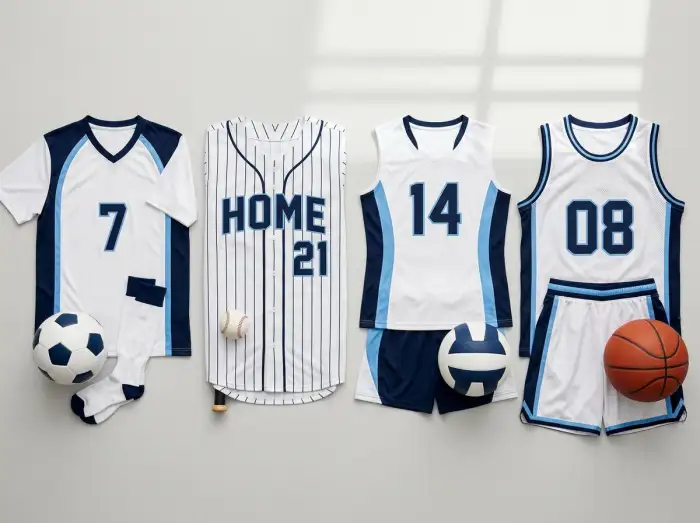
Comprehensive Visual Confirmation:Before formal production begins, we utilize AI to instantly generate 3D digital mockups showing how the garment looks when worn. This allows clients to intuitively preview the finished product's details, ensuring a "What You See Is What You Get" visual confirmation. Additionally, we have built a professional database comprising over 2,000 fabric types and 600 accessory components. As the AI generates design proposals, it automatically and precisely matches the corresponding fabric and accessory specifications, thereby preventing any mismatches between the design artwork and the actual physical materials right from the source.
Dual Color Calibration System:We employ a dual-mechanism approach—combining "smart digital calibration" with "manual expert calibration." This system utilizes advanced digital color management software to precisely match color parameters, followed by a manual review and adjustment process conducted by professional colorists to minimize color discrepancies to the greatest extent possible.
Multi-Dimensional Sample Verification:We provide high-resolution photos or videos of fabric swatches—captured via HD cameras—to allow clients to verify the material's texture and quality. Furthermore, we support the creation and shipment of physical garment samples, ensuring that the quality of the product is fully approved and validated before bulk production commences.
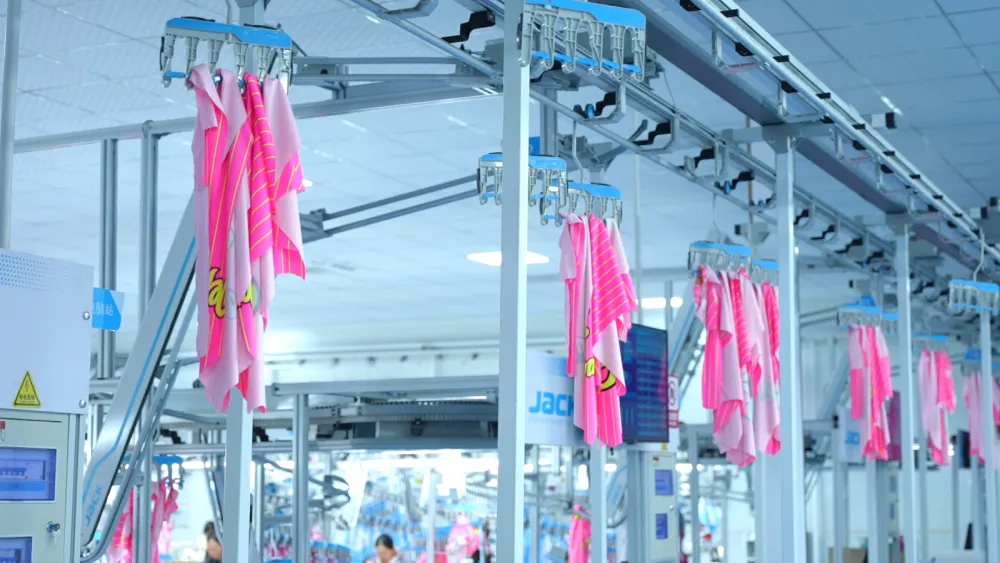
Intelligent Production and Quality Inspection: Design data confirmed by the client is directly fed into Tonton ’s permanent database, enabling our intelligent production lines to manufacture with precision and strict adherence to standards. The production process incorporates a seven-stage quality control system—combining both AI and human inspection—to provide real-time monitoring and quality assurance at every stage, thereby ensuring consistent and stable quality for mass production orders.
2. Print Designs That Neglect Durability
2.1 The Manifestation
This represents a potential pitfall in the design phase that is most easily overlooked: a print design that appears intricate and exquisite on a computer screen may, in reality, fail to withstand the rigors of even a few competitive matches. Some teams have even reported that, after just three washes, a significant portion of the print had already peeled off.
2.2 The Root Cause
Different printing techniques possess vastly different levels of compatibility with specific design elements. If a designer focuses solely on visual aesthetics—without taking into account the physical limitations of the printing process or the durability requirements inherent to athletic environments—the finished product is bound to encounter issues. This is particularly critical for sportswear, which must endure a multitude of stresses—such as sudden stops, stretching, sliding tackles, and frequent weekly laundering—that standard printing methods simply cannot withstand.
2.3 Tonton ’s Solution:
Tonton Sportswear possesses a deep understanding of the demanding conditions under which sportswear is utilized. We offer printing solutions best suited to each client's specific needs and budget level, striving to ensure that every jersey we produce embodies both aesthetic appeal and exceptional durability.
For clients seeking high cost-effectiveness in their daily training gear, Tonton recommends the sublimation printing process. This technique utilizes high heat to infuse dyes directly into the fabric fibers; the result is not only vibrant colors and intricate patterns but also excellent breathability and a comfortable, seamless feel against the skin. Furthermore, because the sublimation print becomes an integral part of the fabric itself, it is highly resistant to peeling or cracking—making it an ideal choice for large-batch team customization, where maintaining quality while controlling costs is paramount.
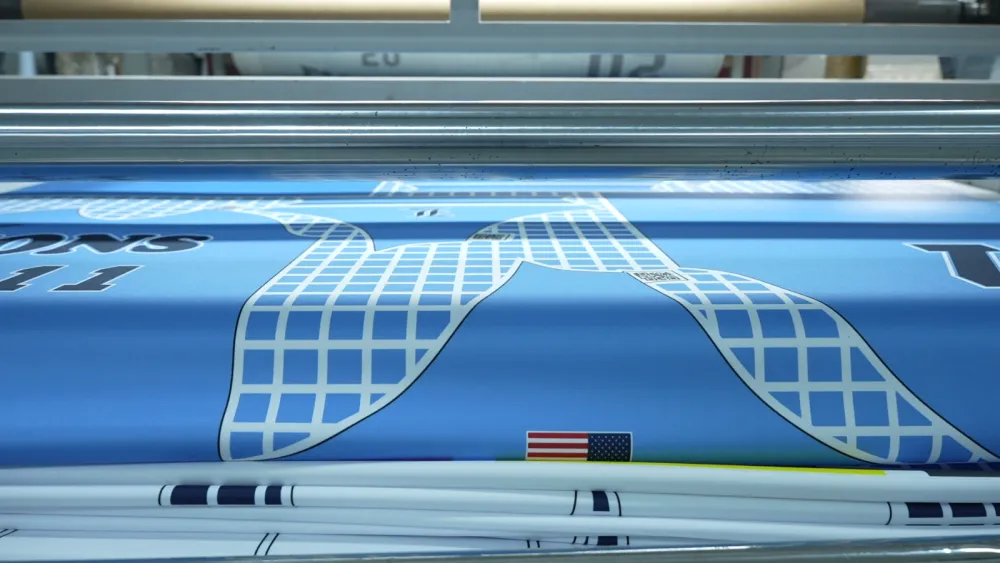
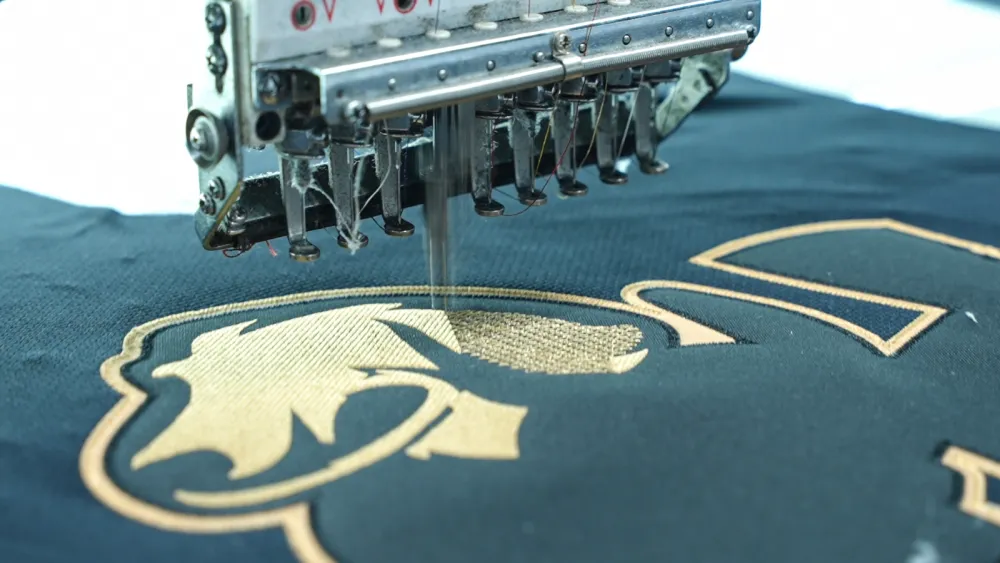
For teams competing in professional tournaments—and those seeking a premium, high-end aesthetic—Tonton employs embroidery and appliqué techniques. The three-dimensional texture and lustrous finish provided by embroidery are unparalleled by any other method, while appliqué adds depth and layering while preserving the integrity of the design. This combination delivers not only powerful visual impact but also exceptional durability, capable of withstanding high-intensity athletic activity and frequent laundering—making it the definitive choice for quality on the professional playing field.
To meet the dual demands of precise pattern presentation and customized durability, Toteng Sports can offer a variety of production options such as DTF white ink transfer printing and high-quality screen printing, which are suitable for the production of various complex gradients and delicate details; at the same time, relying on its self-developed digital printing custom production line, the optimal printing scheme can be matched according to the characteristics of different fabrics to ensure that the logo and pattern products are resistant to water washing and friction, and meet the quality requirements of various clothing customization.
3. Significant Discrepancies Between Sizing/Fit and the Actual Product
According to industry feedback, many purchasing parties simply asked the players to report their "usual daily wear size". However, after receiving the clothes, each person ended up with very different results. The fundamental reason lies in the fact that the size standards for different brands and different styles are not uniform - for the same M size, the actual size can vary by as much as several centimeters depending on the manufacturer.
Tonton ’s Solution:
With 20 years of deep expertise in the custom apparel sector, Tonton Sportswear has built a global sizing system tailored to the international market. This system is the result of extensive, long-term data collection on the actual body measurements of men, women, and youth, combined with an analysis of regional body types and the specific demands of various athletic disciplines—all powered by intelligent AI pattern-making technology.

This system precisely matches key fit parameters—such as shoulder slope and chest circumference—and offers refined segmentation of cuts to suit specific contexts, ranging from performance-oriented compression gear to casual everyday wear. Our comprehensive size library spans the full spectrum from XXS to 7XL, accommodating adults, children, plus-sizes, and unique body types. Applicable across our entire range of sports equipment, this single unified system effectively meets the diverse custom apparel needs of sports clubs, educational institutions, professional teams, and international brands.
FAQ
Q1: How can we avoid the discrepancy between the actual sports wear and the design drawing when customizing sportswear?
A:We support 3D effect preview + intelligent manual double color checking, fabric sample and finished garment sample confirmation, and full digital quality control throughout the chain to eliminate color difference, print deviation and incorrect goods from the source.
Q2: What printing process for custom sports uniforms is water-resistant and does not fade?
A:According to the scene, the following techniques are matched: thermal transfer printing, patch embroidery, DTF white ink heat transfer printing, etc. Thermal transfer printing is recommended. For high-end events, thermal transfer printing combined with patch embroidery is adopted. It is suitable for sports stretching and frequent washing. The printing is firm, does not crack, does not fall off, and does not change color.
Q3: Why are custom sportswear of the same size different in actual size?
A:There is no unified sizing standard in the industry. We rely on 20 years of human body data and AI intelligent pattern making to establish an international standard sizing system. The parameters of the same size are unified, and the patterns are standardized without confusion.
Q4: Can custom-made sportswear be sampled before mass production?
A:OK. We support fabric swatch viewing for texture assessment and sample garment production for confirmation. After the customer is satisfied with the pattern, fabric and printing, we will arrange for mass production of the goods, effectively avoiding the risk of customization failure.
Q5: How to avoid pitfalls when customizing team sports uniforms?
A:Prevent mistakes from the three common sources: design effect, print durability, and size and style. Digital production combined with 7 layers of AI and human quality inspection ensure that the bulk production is consistent with the sample in quality.
Q6: Can we customize exclusive sportswear without a design draft?
A:OK. Tonton Sportswear has a professional design team that can provide free customized LOGO, layout and a complete set of sportswear customization solutions for enterprises, teams and schools.
Q7: Does the sportswear support customization for children, plus sizes and special body types?
A:Yes, it does. The size range covers from XXS to 7XL, and it supports customization for adults, teenagers, children and special body types. There are two types of styles available: competitive tight fit and daily casual.
Q8: Can sportswear be customized in small quantities? What is the minimum order quantity?
A:Minimum order quantity is 0, and the minimum order size is 1 piece.We support small-batch customization for classes and teams, and also accept large-batch orders from schools, clubs, and cross-border brands.
Q9: Can the complex gradient full-print LOGO sportswear be accurately reproduced?
A:We have our own digital printing production line, which can accurately reproduce gradients, full prints and complex LOGO details with true colors, clear patterns, no distortion or deformation.
Q10: What are the differences in customization techniques between professional competition uniforms and daily training uniforms?
A:For training uniforms, we recommend sublimation printing, which offers excellent value for money and is breathable and comfortable. For professional competition uniforms, we recommend a combination of sublimation printing and embroidery or patch embroidery. This approach allows for personalized designs while providing a three-dimensional texture, as well as durability and wash resistance, making it ideal for high-intensity competition settings.
Summary: Quality Control Starts at the Source
Discrepancies between design mockups and finished products often stem from a lack of control at the source. Tonton Sportswear pushes the quality defense line forward: AI-assisted design ensures that digital renderings precisely match the physical product; advanced digital printing techniques guarantee durability; and our international sizing system—honed over two decades—resolves the chaos of inconsistent garment fits. By creating a closed-loop control system for these three critical, error-prone areas—design, printing, and sizing—we ensure that for our bulk production orders, what you see is truly what you get.